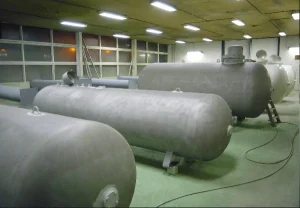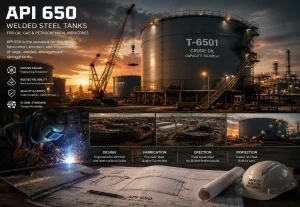

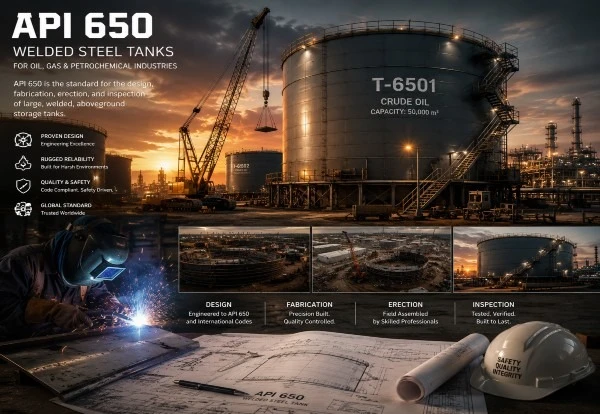
Pictured above: API 650 vs API 653 Tank
API Tank 650 vs API 653: What Is the Difference?
API Tank 650 and API 653 are two of the most common standards associated with aboveground storage tanks. Because both are connected to API storage tanks, they are sometimes confused with each other. However, they are not used for the same purpose.
The simplest difference is this: API 650 is primarily used for the design and construction of welded aboveground storage tanks, while API 653 is used for the inspection, repair, alteration, reconstruction, relocation, and continued service of existing tanks.
In other words, API 650 helps define how a tank is built. API 653 helps define how that tank is evaluated and maintained after it has been placed in service.
What Is API 650?
API 650 is the standard commonly associated with the design and construction of welded steel storage tanks. These tanks are typically vertical, cylindrical, aboveground tanks used to store petroleum, petroleum products, chemicals, water, and other liquids.
API 650 provides requirements related to tank materials, design, fabrication, erection, examination, testing, and other construction-related details. It is often used when a new aboveground storage tank is being designed or built.
A tank built to API 650 may include requirements for shell courses, bottom plates, roof design, weld joints, nozzles, wind girders, anchorage, hydrostatic testing, and other design or fabrication considerations.
For owners, manufacturers, engineers, and inspectors, API 650 is important because it helps establish the original construction basis for the tank.
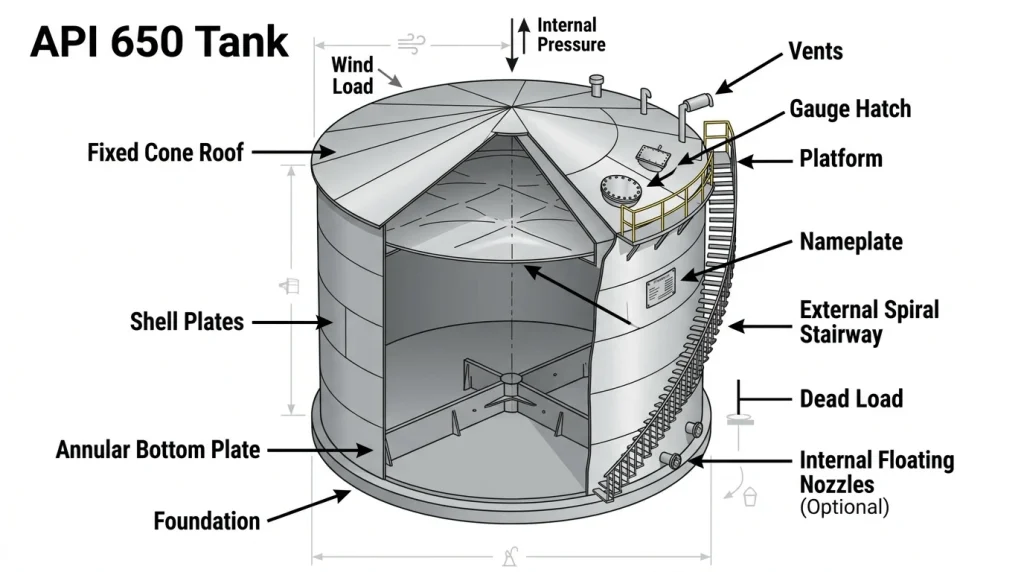
Pictured above: API 650 Tank
What Is API 653?
API 653 is the standard commonly associated with tank inspection, repair, alteration, reconstruction, and continued service. It applies after a tank has already been built and placed in service. API 653 is used to evaluate the condition and integrity of existing aboveground storage tanks. This can include external inspections, internal inspections, shell evaluations, bottom evaluations, settlement checks, repair requirements, alteration requirements, and documentation review.
The purpose of API 653 is not to design a brand-new tank from scratch. Instead, it is used to determine whether an existing tank remains suitable for continued operation and what actions may be required if damage, corrosion, settlement, distortion, or other issues are found.
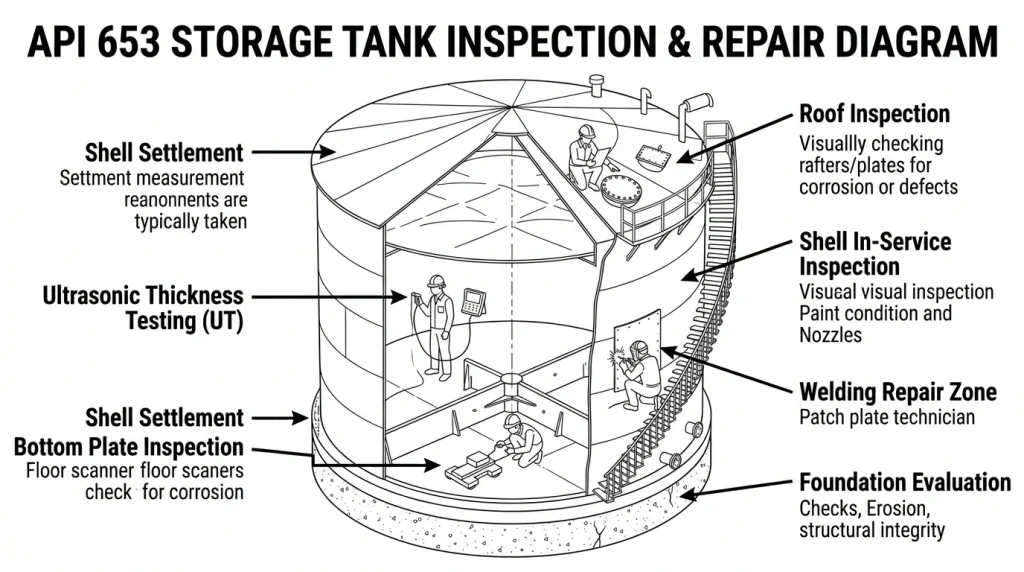
Pictured above: API 653 Tank
API 650 vs API 653: The Simple Difference
The easiest way to understand the difference is to look at the stage of the tank’s life.
API 650 is for new tank construction.
It is used when a welded aboveground storage tank is being designed, fabricated, erected, and tested.
API 653 is for existing tanks.
It is used after the tank is in service and needs inspection, repair, alteration, relocation, reconstruction, or evaluation for continued service.
A tank may be built to API 650 and later inspected under API 653. The two standards are connected, but they are not interchangeable.
How API 650 and API 653 Work Together
API 650 and API 653 often work together over the life of a tank.
For example, a facility may install a new aboveground storage tank built to API 650. After years of service, that same tank may require periodic inspection, thickness evaluation, settlement assessment, or repair. At that point, API 653 becomes the standard used to help evaluate the tank’s current condition.
The original API 650 design information can still matter during an API 653 inspection. Inspection personnel may review construction records, drawings, material information, nameplate data, prior repair records, previous inspection reports, and design details to better understand the tank.
This is one reason documentation matters so much. A tank with complete records is often easier to evaluate than one with missing or incomplete construction and inspection history.
Why the Difference Matters
Confusing API 650 and API 653 can lead to incorrect assumptions about what standard applies to a specific situation.
If a company is building a new tank, API 650 may be the applicable construction standard. If a company is inspecting an existing tank, evaluating corrosion, planning repairs, or determining whether a tank can remain in service, API 653 may be the applicable standard.
This distinction can affect inspection scope, repair planning, documentation requirements, engineering review, owner/operator decisions, and regulatory expectations.
For example, a repair organization working on an existing tank may need to consider API 653 requirements, even if the tank was originally built to API 650. The original construction standard does not replace the need to properly evaluate the tank’s current condition.
From Our Sponsor
Common Situations Where API 650 Applies
API 650 is commonly associated with situations such as:
New aboveground storage tank construction
Tank design and engineering
Material selection for new tanks
Fabrication and erection requirements
Welding and examination during construction
Hydrostatic testing of a newly constructed tank
Nameplate and documentation requirements for new tanks
API 650 is most relevant before the tank enters service or during original construction-related activities.
Common Situations Where API 653 Applies
API 653 is commonly associated with situations such as:
External tank inspections
Internal tank inspections
Tank bottom evaluations
Shell thickness evaluations
Settlement evaluations
Tank repairs
Tank alterations
Tank reconstruction
Tank relocation
Fitness-for-service considerations
Continued service evaluations
API 653 is most relevant once the tank has been placed in service and needs to be inspected, maintained, repaired, or evaluated.
Who Uses API 650 and API 653?
API 650 and API 653 may be used by different groups depending on the work being performed.
API 650 is often used by tank manufacturers, engineers, fabricators, erectors, inspectors, and owners involved in new tank construction.
API 653 is often used by owner/operators, authorized inspectors, repair organizations, engineers, inspection companies, and facilities responsible for maintaining existing tanks.
In many industrial settings, both standards may be important. API 650 establishes the original construction framework, while API 653 helps guide the inspection and maintenance process throughout the tank’s service life.
Final Takeaway
API 650 and API 653 are closely related, but they serve different purposes.
API 650 is primarily for the design and construction of welded aboveground storage tanks. API 653 is for the inspection, repair, alteration, reconstruction, relocation, and continued service of existing tanks.
A tank may begin its life under API 650 and later be evaluated under API 653. Understanding the difference helps owners, operators, inspectors, engineers, and repair organizations apply the correct standard at the correct stage of the tank’s life.
For anyone working with aboveground storage tanks, knowing when API 650 applies and when API 653 applies is an important part of managing tank safety, compliance, documentation, and long-term reliability.
For anyone working with aboveground storage tanks, knowing when API 650 applies and when API 653 applies is an important part of managing tank safety, compliance, documentation, and long-term reliability.