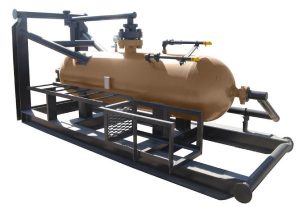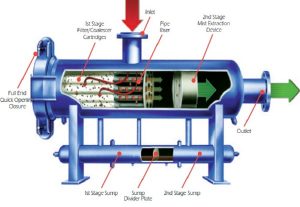

Pictured above: Heating boilers unintentionally cross into ASME Section I power boiler
When a Heating Boiler Becomes a Power Boiler (Without Anyone Noticing)
Just a series of well‑intended changes—and suddenly, a boiler that was once clearly under ASME Section IV quietly crosses the line into ASME Section I territory.
And that’s when inspectors, jurisdictions, and project managers start asking uncomfortable questions.
This article explains how heating boilers unintentionally become power boilers, why it matters, and how to prevent costly compliance surprises.
It usually doesn’t happen overnight.
No dramatic alarms. No explosions. No villain monologue.
The Key Difference
Before we get sneaky, let’s anchor the basics.
A boiler is considered a power boiler (ASME Section I) if it operates at:
- Steam pressure above 15 psi, or
- Hot water temperature above 250°F
If it stays at or below those limits, it generally falls under ASME Section IV.
Cross either threshold—even briefly or theoretically—and the rules change.
How Boilers Accidentally Cross the Line
Here’s where things get interesting.
1. Temperature Creep During System Upgrades
A facility upgrades equipment:
- New heat exchangers
- Different process loads
- Improved insulation
- Higher system efficiency
To meet demand, operators bump up water temperature—sometimes gradually, sometimes temporarily.
Suddenly:
- Design temperature exceeds 250°F
- Control setpoints no longer match original code intent
The boiler didn’t change. The conditions did.
2. Process Steam Sneaks In
A boiler installed for comfort heating starts doing “just a little more”:
- Humidification
- Sterilization
- Light process heating
- Equipment startup assistance
That steam is no longer just about heating people—it’s supporting a process.
Many jurisdictions interpret this as power boiler service, even if pressures stay modest.
3. Pressure Relief and Control Modifications
Control systems get modernized:
- New PLCs
- Reprogrammed safety limits
- Changed relief valve setpoints
If relief devices are adjusted above 15 psi (intentionally or not), the boiler may now exceed Section IV limits—even if operators swear they “never run it that high.”
Inspectors care about capability, not promises.
4. Temporary Operating Conditions Become Permanent
Common scenario:
“We only run it hotter during winter peaks.”
Temporary operations have a habit of becoming permanent.
If documentation, controls, or hardware allow Section I conditions, the boiler is often treated as a Section I boiler—seasonal intent doesn’t override design reality.
5. Replacement Parts Change the Equation
Component replacements can quietly shift classification:
- New burners
- Higher‑capacity pumps
- Different control valves
- Updated relief devices
Each change may be reasonable on its own—but together, they can push a heating boiler beyond its original code envelope.
From Our Sponsor
Why Inspectors Flag This Immediately
Authorized Inspectors and jurisdictional authorities focus on worst‑case capability.
They ask:
- What pressure can this boiler reach?
- What temperature can this system achieve?
- How is it protected?
- What code was it originally built to?
If the answers point toward Section I conditions, the boiler is evaluated accordingly—regardless of how it started its life.
The Risks of Getting This Wrong
Misclassification isn’t a technicality. It carries real consequences:
- Failed inspections
- Mandatory redesigns
- Shutdown orders
- Insurance complications
- Liability exposure after incidents
In some cases, owners are forced to replace equipment that is mechanically sound—but code‑noncompliant.
How to Prevent the Surprise
Smart facilities do this proactively:
- Document original code classification clearly
- Review pressure and temperature limits before system changes
- Consult an Authorized Inspector early
- Evaluate cumulative modifications, not just individual ones
- Align controls, relief devices, and documentation with intended code
A 30‑minute code review can prevent a six‑figure correction.
Final Thoughts
Heating boilers don’t usually decide to become power boilers.
They get nudged there—slowly, quietly, and unintentionally.
Understanding where the ASME Section IV boundary ends and Section I begins is one of the most overlooked risk areas in boiler systems.
If you’re modifying, upgrading, or repurposing a boiler system, ask the uncomfortable question early:
“Are we still operating this as a heating boiler—or have we crossed the line?”