
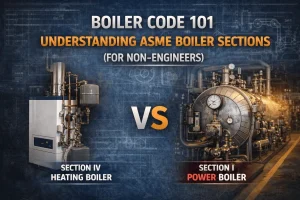
Boiler Code 101: Understanding ASME Boiler Sections (For Non-Engineers)
ASME boiler codes can sound intimidating, especially if you’re not an engineer by trade. The good news? You don’t need to memorize the Code to understand the basics.
This article highlights the most common ASME Section I mistakes that trigger inspection red flags, why inspectors care about them, and how to avoid unnecessary pain at the worst possible time.
If the S-Stamp is the finish line, the Authorized Inspector (AI) is the gatekeeper holding the stopwatch. Before that stamp ever touches a boiler, inspectors are verifying far more than weld quality or paperwork completeness. They’re answering one critical question:
Learn how heating boilers unintentionally cross into ASME Section I power boiler classification, what inspectors look for, and how to avoid costly compliance surprises.
Learn the key differences between ASME Section I and Section IV boilers, including pressure limits, inspection requirements, and why choosing the right code matters for safety and compliance.
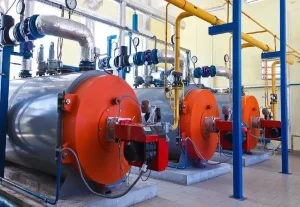
ASME Section I of the Boiler and Pressure Vessel Code (BPVC) governs the design, construction, and certification of power boilers—the heavy hitters used to generate steam or high‑temperature water for power generation, industrial processes, and large facilities. This section exists for one reason above all others: safety through standardization.
An S-Stamp is a certification mark issued by the National Board of Boiler and Pressure Vessel Inspectors (NBBPVI). It signifies that a manufacturer is authorized to build and stamp power boilers, which are pressure vessels designed to generate steam for various applications, such as power generation, heating, and industrial processes.