
Read more about the article Two-Phase Separator Vs Three-Phase Separator
Picture of a Two-Phase Separator Vs Three-Phase Separator

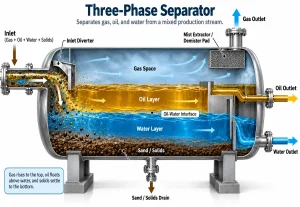
Two-Phase Separator Vs Three-Phase Separator

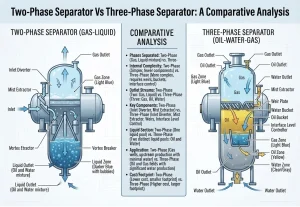
The key difference between a two-phase separator and a three-phase separator is the number of phases they are designed to separate. While a two-phase separator separates gas and liquid, a three-phase separator can handle gas, oil, and water. The design and internal components of the separators may vary accordingly to accommodate the different phases and their interactions.
Continue ReadingTwo-Phase Separator Vs Three-Phase Separator
Read more about the article Three-Phase Separator
Picture of a roll of brown painted Three-Phase Separator

Three-Phase Separator

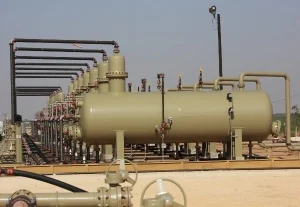
Produced well fluids consist of various amounts of oil, water, natural gas, and sediment. The first step in oil and gas production is to split the flow up into its individual components with a separator. A three-phase separator uses gravity to separate produced well fluid into gas, oil, and water phases. Installation of these vessels occurs near the wellhead

Continue ReadingThree-Phase Separator
Read more about the article Vertical Three-Phase Separator with A Downcomer and Spreader
Vertical-3-Phase-Separator-with a Downcomer and Spreader

Vertical Three-Phase Separator with A Downcomer and Spreader

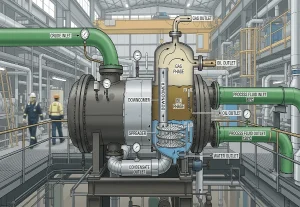
A three-phase separator is a crucial piece of equipment in the oil and gas industry, designed to separate a mixture of oil, gas, and water into its individual components. The vertical three-phase separator, equipped with a downcomer and spreader, is a particularly efficient design for handling a wide range of flow rates and liquid-gas ratios.

Continue ReadingVertical Three-Phase Separator with A Downcomer and Spreader
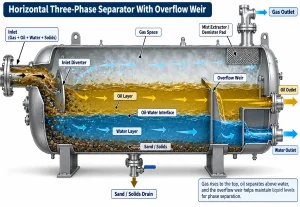
Read more about the article Horizontal Three-Phase Separator With Overflow Weir
A picture showing how a Horizontal Three-Phase Separator With Overflow Weir works

Horizontal Three-Phase Separator With Overflow Weir

In a horizontal three-phase separator with an overflow weir, fluid enters the vessel through an inlet and immediately hits an inlet diverter. The sudden impact and change of direction helps to release the gas by breaking the surface tension of the liquid.

Continue ReadingHorizontal Three-Phase Separator With Overflow Weir
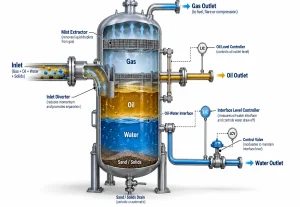
Read more about the article Vertical Three-Phase Separator with Interface Control
Vertical Three-Phase Separator with Interface Control

Vertical Three-Phase Separator with Interface Control

A three-phase separator is a crucial piece of equipment in the oil and gas industry, designed to separate a mixture of oil, gas, and water into its individual components. The vertical three-phase separator, equipped with interface control, is a particularly efficient design for maintaining optimal separation efficiency and preventing liquid carryover.

Continue ReadingVertical Three-Phase Separator with Interface Control
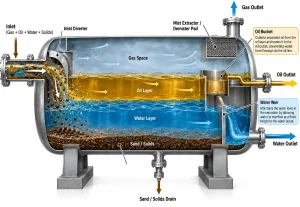
Read more about the article Horizontal Three-Phase Separator with Oil Bucket and Water Weir
Horizontal Three-Phase Separator with Oil Bucket and Water Weir

Horizontal Three-Phase Separator with Oil Bucket and Water Weir

In a horizontal three-phase separator with an oil bucket and water weir, the vessel does not require an active interface controller. As the oil separates on top of the water it spills over the weir plate and into the oil bucket. The oil level in the bucket is controlled by a level controller sending a signal to the oil dump valve.

Continue ReadingHorizontal Three-Phase Separator with Oil Bucket and Water Weir

No more posts to load