Spiral Heat Exchangers

Spiral Heat Exchangers

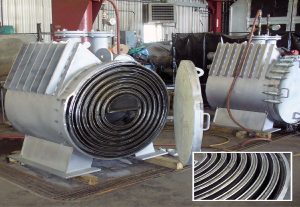
A spiral heat exchanger consists of two spiral-wound channels, one for each fluid. The two channels are separated by a partition, and the fluids flow in opposite directions through the channels. This counter-current flow arrangement maximizes heat transfer efficiency. Spiral heat exchangers are a specialized type of heat exchanger that offer numerous advantages over traditional shell-and-tube and plate-and-frame designs.

Continue ReadingSpiral Heat Exchangers
Two-Phase Vertical Separator

Two-Phase Vertical Separator

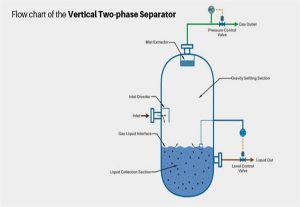
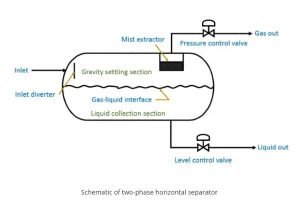
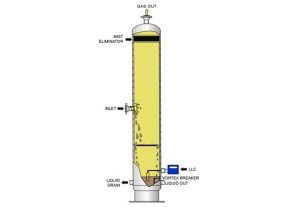
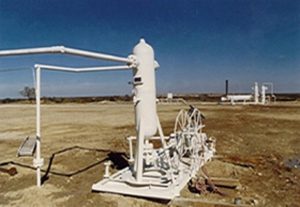
A vertical separator is a cylindrical vessel that is oriented vertically. When a gas-liquid mixture enters the separator, the heavier liquid phase settles to the bottom, while the lighter gas phase rises to the top. The liquid phase is then drawn off through a liquid outlet nozzle, while the gas phase exits through a gas outlet nozzle located at the top of the vessel.

Continue ReadingTwo-Phase Vertical Separator

Two-Phase Spherical Separators

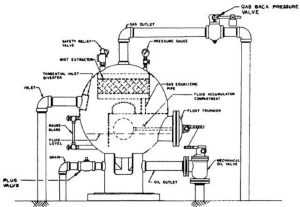
Two-Phase Spherical Separators operate on the principle of gravity separation. When a gas-liquid mixture enters the vessel, the heavier liquid phase settles to the bottom, while the lighter gas phase rises to the top. The unique spherical shape of the vessel promotes efficient separation by minimizing turbulence and maximizing the contact area between the two phases.

Continue ReadingTwo-Phase Spherical Separators

Sand Separators

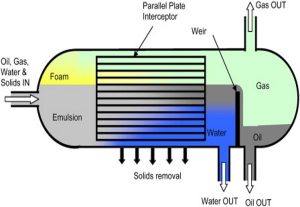
Sand Separators. In the oil and gas industry, it is more commonly known as a separator and is a core component of extracting oil from earth and sand. Sand separators are an integral part in protecting downstream production equipment from well-formation sand and/or frac sand. The Sand Separator is a pressure vessel specifically designed

Continue ReadingSand Separators

No more posts to load