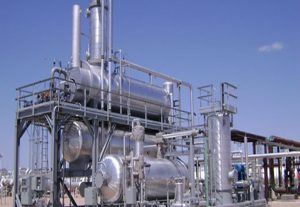
Natural Gas Dehydration
Natural gas dehydration is the process of removing water vapor from natural gas. A gas dehydration system is used by oil and gas producers to dehydrate natural gas into a state where it can be sold downstream.


Natural gas dehydration is the process of removing water vapor from natural gas. A gas dehydration system is used by oil and gas producers to dehydrate natural gas into a state where it can be sold downstream.
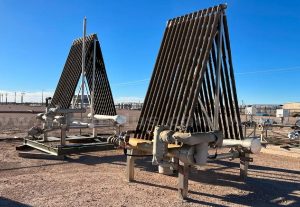
BTEX Condenser Units are essential components of natural gas dehydration processes. These units are designed to capture and condense harmful volatile organic compounds
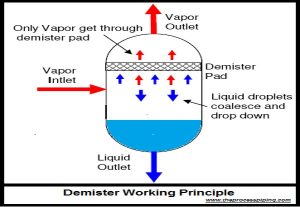
A demister is also known as a demister pad, mist pad, wire mesh demister, mesh mist eliminator, catching mist, and mist eliminator. It is a device often fitted to vapor–liquid separator vessels to enhance the removal of liquid droplets entrained in a vapor stream.
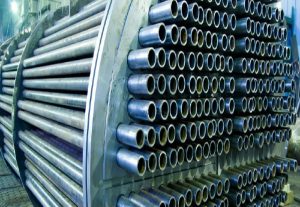
Heat exchangers are used to transfer heat from one medium to another. These media may be a gas, liquid, or a combination of both. The media may be separated by a solid wall to prevent mixing or may be in direct contact.
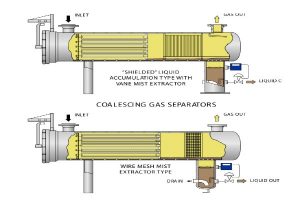
Coalescing gas separators are designed specifically for the removal of mist, fog, and dust from gas streams. These contaminants usually exist with the bulk of the particles having diameters considerably less than 10 microns; therefore, standard separators or scrubbers are not capable of effectively removing these minute particles.
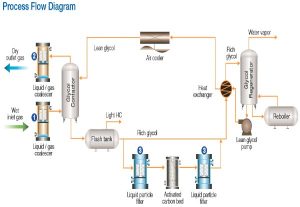
The temperature of the glycol entering the contactor has a significant effect on the gas dew point depression and should be held to within 10oF above the inlet gas temperature. Higher glycol losses and higher outlet gas dew points occur when the lean glycol enters the contactor at a temperature more than 100F above the gas temperature
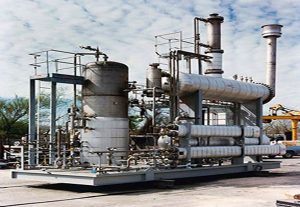
Glycol dehydration processes utilize glycol solvents to remove water from wet natural gas to meet pipeline quality specifications or condition the gas for condensate liquids removal.
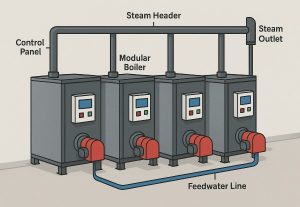
Modular boilers are compact, factory-assembled boiler units designed to work together in a series — offering scalable steam or hot water generation based on demand. Rather than relying on a single large boiler, modular systems operate with multiple small units that can be staged on or off as needed.
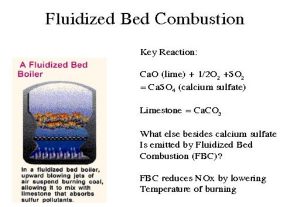
Fluidized bed boilers (FBBs) use a unique combustion method where solid fuel particles are suspended in an upward flow of air — creating a fluid-like state. This allows for highly efficient combustion at lower temperatures with improved emissions control.
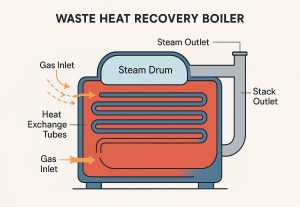
Waste heat recovery boilers (WHRBs) capture hot exhaust gases from industrial processes or engines and use that heat to generate steam or hot water — without burning additional fuel.