
Read more about the article Electric Boilers Explained
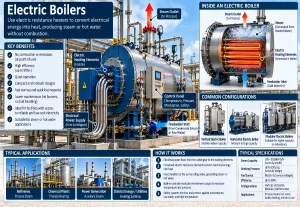
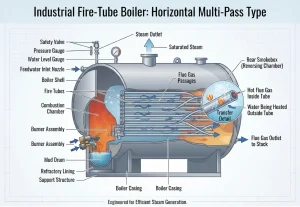
A picture explaining the workings of a Electric Boilers

Electric Boilers Explained

Electric boilers use electricity to generate steam or hot water — eliminating the need for fuel combustion. Unlike traditional boilers, there are no burners, gas valves, or flue stacks. Heat is generated through electrical resistance or electrode-type elements, making them clean, quiet, and often more compact.

Continue ReadingElectric Boilers Explained
Read more about the article What Are Water-Tube Boilers?
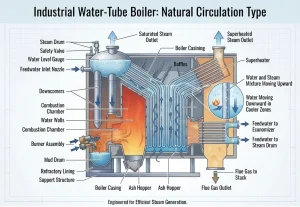
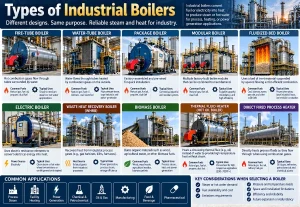
A picture showing the working process of Water-Tube Boilers

What Are Water-Tube Boilers?

A water-tube boiler is a type of boiler where water circulates inside the tubes, and hot combustion gases flow around the outside of those tubes. This design is ideal for high-pressure applications and large steam outputs, making it the go-to choice for power plants, refineries, chemical processing, and other heavy-duty industries.

Continue ReadingWhat Are Water-Tube Boilers?
Read more about the article Boiler Maintenance Best Practices: Avoiding Costly Downtime
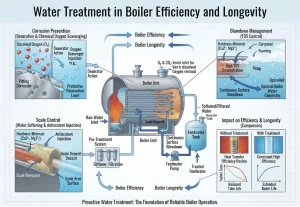
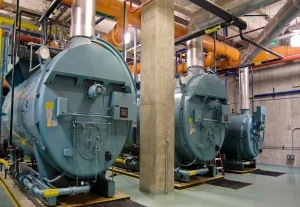
A picture of boilers: Boiler Maintenance Best Practices

Boiler Maintenance Best Practices: Avoiding Costly Downtime

In industrial operations, boiler downtime isn’t just an inconvenience—it’s a profit killer. Whether it’s lost production, emergency repair costs, or compliance penalties, a boiler failure can have far-reaching impacts. Fortunately, many of these issues are preventable with a strong, proactive maintenance strategy. In this post, we’ll cover boiler maintenance best practices that help keep systems running safely, efficiently, and reliably—while minimizing surprise shutdowns.

Continue ReadingBoiler Maintenance Best Practices: Avoiding Costly Downtime

No more posts to load